Dr. Mudassar Altaf, Associate Professor of Chemistry, Department of Higher Education, Government of the Punjab, Pakistan
Contents:
- Tests to check presence of water in the sample
- Analysis of water purity
- Use of distilled water
- Impurities in water
- Definition of dissolved oxygen & its benefits
- Benefits of essential ions in water
- Toxic metal compounds in water
- How the plastic harms the life?
- Harmful microbes
- Deoxygenation: definition and deoxygenation by nitrates and phosphates; eutrophication
- Treatment of domestic water supply
- Sedimentation
- Filtration
- Chlorination
Tests to Check Presence of Water in the Sample:
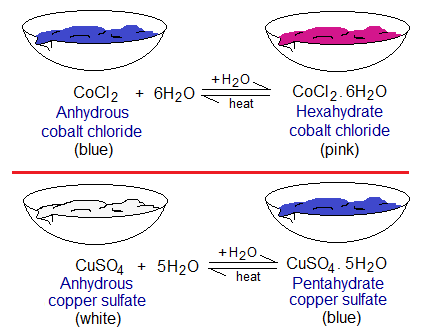
Anhydrous cobalt(II) chloride and anhydrous copper(II) sulphate are the chemicals used to test the presence of water in the sample. This topic has also been discussed in https://chemiologist.com/salts-their-preparation/ .
- CoCl2 is a blue compound in its anhydrous form; but it turns pink when absorbs moisture and changes into hydrated form (CoCl2.6H2O).
- On heating the hydrated cobalt(II) chloride, again it changes to anhydrous form.
- CuSO4 is a white compound in its anhydrous form; but turns to blue after absorbing moisture and consequently, the hydrated CuSO4.5H2O is formed.
- On heating the hydrated copper(II) sulphate, again it changes to anhydrous form.
Analysis of Water Purity:
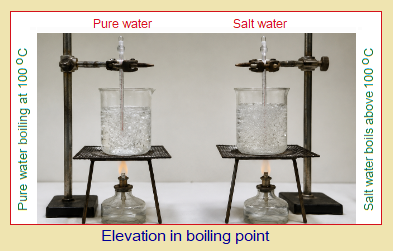
Melting and boiling points of water are the parameters to test the purity of water. Pure water has its fixed melting and boiling points at 1 atmospheric pressure. However, these values change due to the presence of impurity.
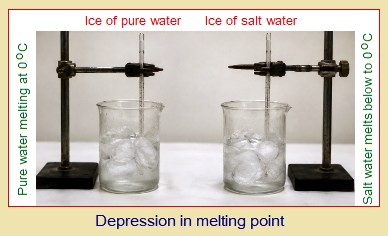
- The melting (freezing) point of pure water is 0°C at 1 atmospheric pressure. However, it lowers due to the presence of impurity of dissolved salts; thus, freezes below to 0°C. In other words, the ice of impure water starts melting below to 0°C. This is called freezing point depression or melting point depression.
- The boiling point of pure water is 100°C at 1 atmospheric pressure. However, it boils above to 100°C due to the presence of impurity of dissolved salts. This is called boiling point elevation.
Fascinating Information:
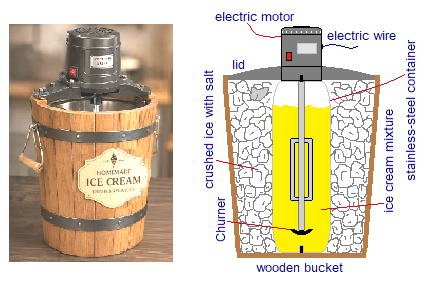
For making ice cream, the wooden bucket (chamber) is filled with crushed ice and sodium chloride salt in order to get the outer jacket of ice cream making stainless-steel container with enhanced cooling due to freezing point depression.
Use of Distilled water:
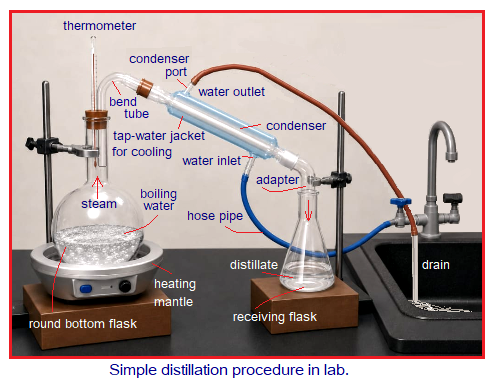
To remove impurities from tap water, it is distilled. Distillation is a process in which water is boiled and its steam is passed through condenser for cooling to collect pure water. A simple distillation apparatus and procedure is shown below in the figure. The impurities do not fly with steam and remain in boiling flask where the impure water is boiling. The pure water is collected in receiving flask as distillate.
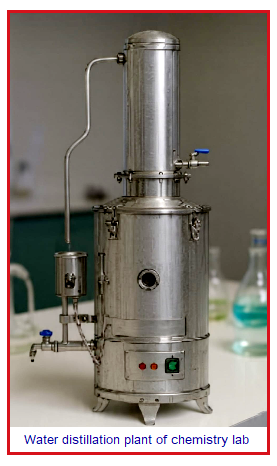
The tap water contains dissolved salts in the form of ions. These are metallic ions, such as, Na+, K+, Ca+2, and Mg+2; and non-metallic anions, such as, chloride (Cl–), carbonate (CO32-), bicarbonate (HCO3–), sulphate (SO42-), and nitrate (NO3–). In laboratories, distilled water is used for experiments rather than tap water. A simple small sized water distillation electric plant is a necessary part of the laboratories.
Impurities in Water:
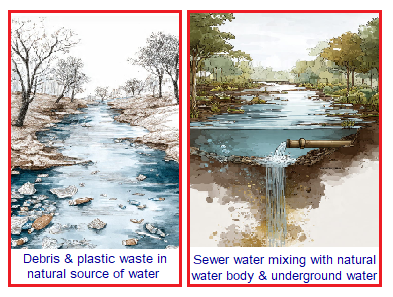
The natural sources of water, including rivers, ponds, streams, groundwater, are not safe and healthy to use unless not purified. The impurities might be:
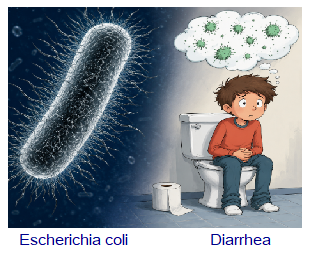
- Mixing of sewage water in water bodies. Sewage water is a source of microbes, like E. coli bacteria (cause diarrhea), salmonella bacteria (cause typhoid fever and food poisoning), hepatitis A virus etc.
- Dissolved salts as previously mentioned.
- Plastic, particularly in the form of shoppers, plastic waste material etc. Careless people don’t care about to keep water clean and they are used to throw garbage.
- Nitrates (NO3–) and phosphates (PO43-) from fertilizers. For example, ammonium nitrate and phosphate fertilizers.
- Phosphates from some detergents.
Dissolved Oxygen (DO) & its Benefits:
Definition of DO: “The amount of oxygen (O2) dissolved in water and is used by aquatic life, including animals, plants, aerobic microorganisms for the biological processes” is called dissolved oxygen. For supporting healthy aquatic life, DO concentration is good when it is in the range of 6-10 mg/dm3. But less than this amount is dangerous. Following benefits the DO gives to ecosystem:
- The aquatic creatures, like fish, sharks, snails etc. breathe the DO through their gills or body surface. Thus, their healthy survival depends upon its normal value.
- The aquatic plants also use DO for their respiration during night; and release oxygen by photosynthesis during day. This oxygen is also a source of DO in water.
- The DO is used by aerobic bacteria and they decompose dead animals, plants, falling leaves, and other organic waste. So, this biological process is beneficial to keep water clean. The aerobic decomposition also eliminates foul odours from water.
- If DO is lesser in quantity or zero, then, the dead plants, and organic debris accumulate, and consequently, leading to anaerobic decomposition; which is a source of spreading bad smell in atmosphere. The gases with foul odour are other than CO2 like H2S (rotten egg smell), NH3 (sharp ammonia smell), and CH4 (swamp/ marsh smell).

Benefits of Essential Ions in Water:
There are many salts present in water, however, these are not dangerous but essential for life. For example, NaCl, KCl, MgCl2, CaCl2, NaHCO3, Mg(HCO3)2, Ca(HCO3)2, MgSO4, CaSO4. These are important for strong teeth, bones, muscles, nerves, and metabolic activities of the body. When these minerals are present in appropriate amount then essential to maintain health of human being.
Toxic Metal Compounds in Water:
The compounds of lead (Pb2+), cadmium (Cd2+), nickel (Ni2+), arsenite (As3+), arsenate (As5+), mercury (Hg2+), copper (Cu2+) are toxic for human health. Their sources are connected with human activities, like industrial waste, mining, coal burning, leather tanning, electroplating, pesticides, water treatment etc. However, the weathering and rock dissolution is also a source of mixing toxic minerals into water mostly by precipitation on natural rocks. Weathering is a natural process by which the rocks break down into smaller particles, these are carried to the water bodies by rain, wind and even transport by living organisms.
How the Plastic Harms the Life?
It is a general practice that we throw waste plastic into water bodies where aquatic creatures live. This malpractice is harmful for them by the following ways:
- The animals can be trapped in packaging materials, plastic bags, or any other plastic body like bottle; can cause them to be injured, or can stop their movement.
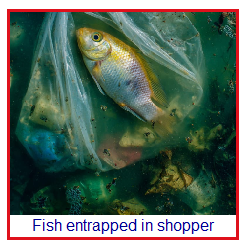
- Animals, like seabirds, fish, turtles can mistakenly eat plastic as food. But it can damage their digestive system.
- Some plastics contain harmful chemicals, e.g., stabilizers, plasticizers, which are toxic for aquatic life.
- Large plastic bodies might break down into tiny particles. These particles are engulfed automatically with food ingestion by aquatic animals.
Harmful Microbes:
“Microbes are the microorganisms, like protozoa (single cell), viruses, bacteria, fungi, algae”. The harmful microbes are present in contaminated water; cause diarrhea, cholera, and typhoid. Sewage is the main reason of water contamination with microbes. Human feces, urine, particularly a discharge from infected people contains such harmful microbes. These are discharged into waste water; and this might be mixed with water bodies if proper management is not working to avoid this mixing. Waste management is itself a complete science and a management system.
- Diarrhea is a watery stool disease and causes dehydration in the body. Its main cause is ‘E. coli’ bacteria and virus, as described in the preceding section.
- Cholera is a severe watery diarrhea, and causes dehydration. It is bacterial infection of the intestine. The ‘Vibrio cholerae’ bacterium is its main cause.
- Typhoid is also a bacterial infection, causes fever, abdominal pain and disturbance of digestive system. The ‘Salmonella typhi’ bacterium is its main cause.
- Hepatitis A virus is entered through contaminated water and food and causes hepatitis A disease of the liver. Human feces in sewage can be another source of its discharge in water bodies if its mixing is not controlled.
Deoxygenation by Nitrates and Phosphates:
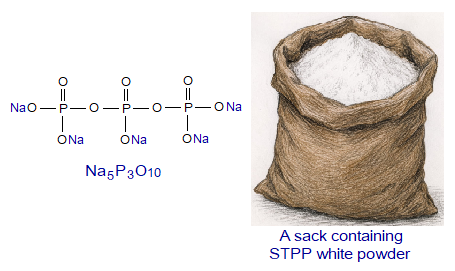
The sources of nitrates and phosphates are industrial waste, sewage, and fertilizers. Phosphates also added in some detergents. The most common are sodium tripolyphosphate (STPP, Na₅P₃O₁₀), and sodium phosphate (Na₃PO₄). Their main role is to make water soft by binding Ca²⁺ and Mg²⁺; otherwise, these ions cause water hardness, i.e., not easy to make lather. So, phosphate ions are added in detergents to improve cleaning action of the surfactants. The nitrates (NO3–) and phosphate (PO₄³⁻, HPO₄²⁻, and H₂PO₄⁻) ions are harmful for aquatic life by the following ways: Nitrates and phosphates cause a rapid growth of algae, consequently, a thick layer is formed. This layer prevents the sunlight to reach underwater plants. So, it retards photosynthesis and ultimately the plants die. This is called eutrophication, and is defined as “the excessive growth of aquatic plants and algae in water due to an increase of nutrients, particularly, nitrates and phosphates, which cause to fall the normal level of dissolved oxygen, and is harmful for aquatic ecosystem”. It has its origin of Greek from ‘eutrophos’ meaning‘well-nourished’.
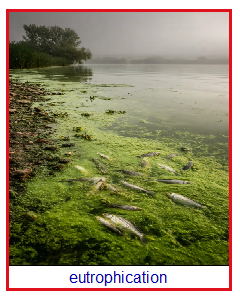
- Aerobic bacteria consume DO of the water by a large quantity of organic dead plants’ decomposition. Ultimately, DO level drops and starts suffocation of aquatic animals, ultimately, they die. So, this oxygen-deficiency is called deoxygenation and is not good for ecosystem.
Fascinating Information:
Sodium tripolyphosphate not only used in detergents and laundry powders, but also in food industry as stabilizer and emulsifier, recognized as E451 code number. It is white powder in its appearance. STPP is also used in ceramics, paper industry, and water treatment.
Treatment of Domestic Water Supply:
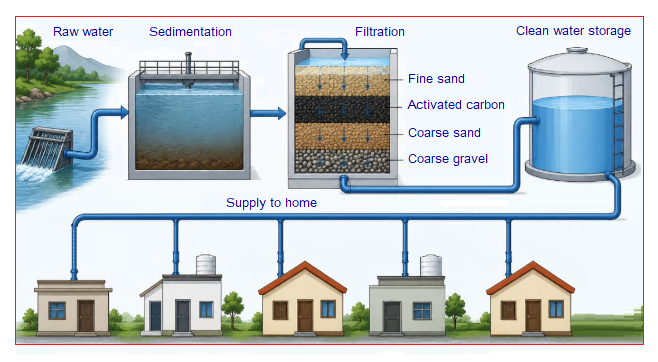
- Sedimentation: The water from natural water bodies is collected in large tanks. The solid particles are allowed to settle down. When the clay, mud, sand and organic matter are settled down, then the clear water instead of bottom layer is removed for further treatment. Sedimentation is defined as, “the process by which insoluble (suspended) solid particles are allowed to move downwards to settle down as sludge (sediment) at the bottom of the tank due to gravity”.
- Filtration: After sedimentation, water is moved towards filtration unit. It is passed through filter layers from top to bottom:
- Fine sand: At the top the fine sand layer traps small suspended particles.Activated carbon: It removes bad odour, and colour, also some organic impurities.
- Coarse sand & gravel: Another sand bed is made above to gravel, which are large stones, rough and are not fine in texture, called coarse. This layer supports the upper layer and also removes large particles.
c. Chlorination: A very minute quantity of chlorine (0.5 to 5 mg/dm3) is added in water that kills microorganisms. The treatment is carried out by adding:
- Chlorine in the form of gas (Cl2),
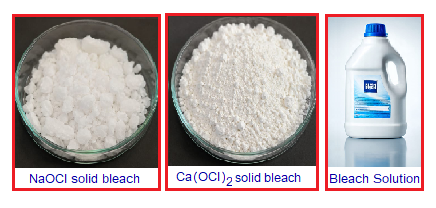
- or in the form of liquid bleach solution of sodium hypochlorite (NaOCl), or calcium hypochlorite [Ca(OCl)2].
- or solid NaOCl or Ca(OCl)2 added.
NaOCl is white solid in anhydrous form, while-yellow in its hydrated form. All form hypochlorous acid (HOCl) that kills microorganisms by damaging their cell membrane, proteins, enzymes, and even their genetic material.